Restorative materials
Monolithic Zirconia Full-Arch Implant Prostheses: A Clinician’s Guide
A practical guide to discussing monolithic zirconia full-arch restorations with your implant dental lab, including design, components and maintenance.
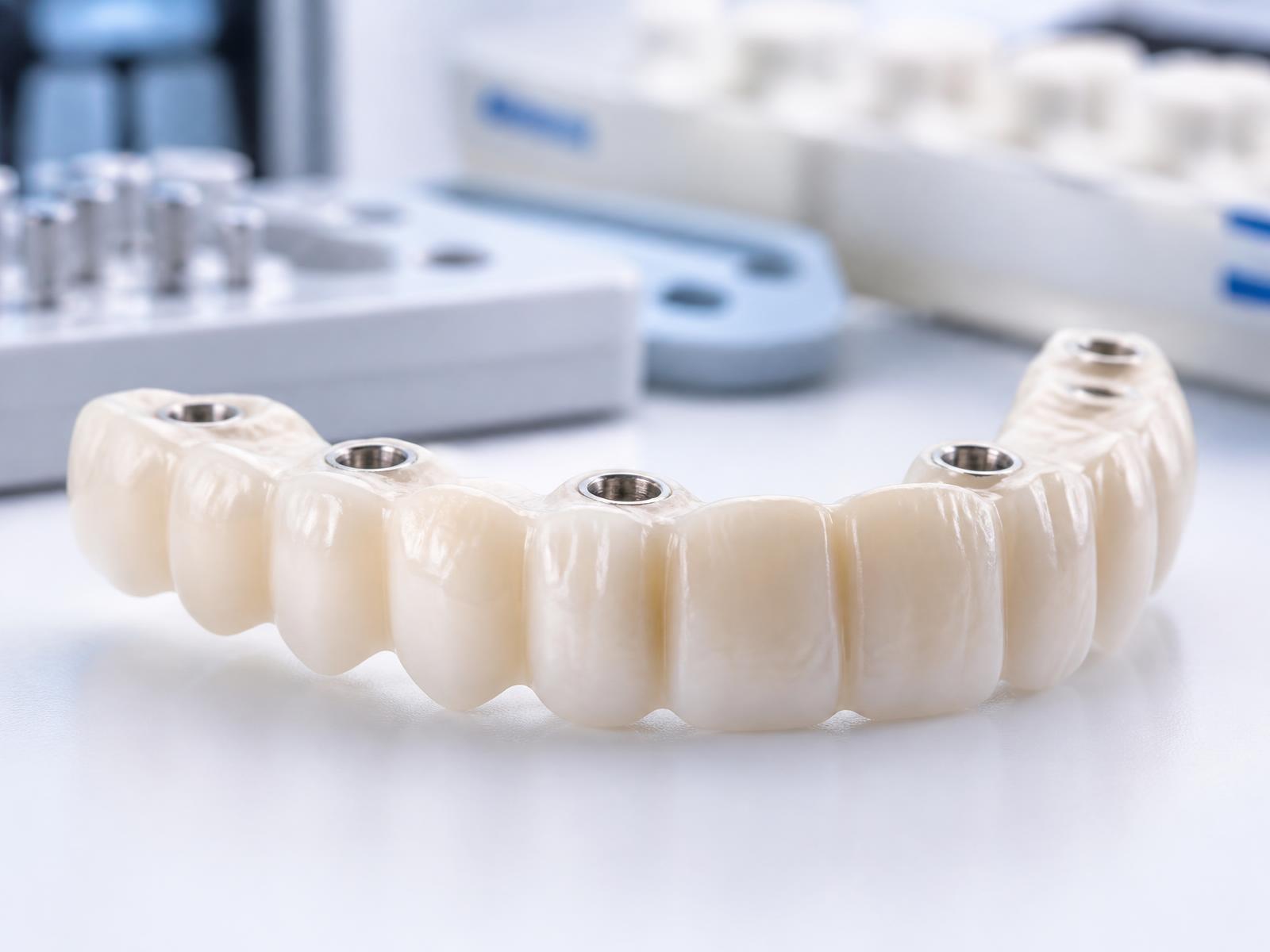
A monolithic zirconia full-arch implant prosthesis uses zirconia for the principal restorative structure. Material selection alone does not determine clinical success: prosthesis design, implant connections, available restorative space, clinical verification and maintenance all need case-specific consideration.
What does monolithic zirconia mean in a full-arch case?
Monolithic describes the principal restorative structure rather than a promise about appearance, strength or service life. Full-arch prostheses may differ in their zirconia formulation, characterization, design and connection configuration. Ask your lab to describe the actual restoration prescribed instead of comparing only the material name.
A complete-arch restoration also needs to work within the clinical plan. The treating clinician and technician should discuss restorative space, component selection, tissue contours and the intended esthetic result. Evidence about one construction should not automatically be applied to every zirconia prosthesis.
Read outcome research in the context of its designs
A 2023 systematic review examined the success and complications of complete-arch implant-supported fixed monolithic zirconia restorations. It provides a useful starting point for reviewing reported outcomes and complications, but differences in study populations, prosthesis designs and follow-up matter.
A published result is not a warranty for an individual patient or a validation of a specific lab’s restoration. Avoid translating general materials research into claims such as ‘never fractures,’ ‘lasts a lifetime’ or ‘fits every case.’ Discuss expected maintenance and potential complications with the patient as part of clinical care.
Make the prescription specific enough to build from
Confirm the planned arch, implant system, MUA components, number of sites and restoration configuration. Specify the records used for implant relationships and the tissue information needed for design. Clarify who will review the proposed design and how the lab should handle an unresolved detail.
Megatec’s listed All-on-X offering is a monolithic zirconia prosthesis, direct-to-MUA without a titanium base for up to six sites. It includes final design with up to two revisions and final clinical Uniscrews; a tissue scan is required for the permanent restoration. Confirm the individual prescription and current scope with the lab.
- Identify implant system, components, arch and sites.
- Discuss planned material and prosthesis configuration.
- Supply implant-position and required tissue records.
- Review design details before manufacturing approval.
- Confirm clinical verification and maintenance responsibilities.
Keep the lab fee separate from treatment pricing
Megatec lists $1,499 ALL IN for its zirconia case. This is a laboratory offering, not the total cost of implant surgery or patient care. A written case-specific quote is the appropriate place to confirm what is included, any additional services and scheduling.
A material decision should follow the restorative plan, not simply the lowest advertised price. Use the design conversation to assess whether the proposed restoration meets the case’s requirements and what clinical review will be needed before delivery.
Sources & further reading
- The Success and Complications of Complete-Arch Implant-Supported Fixed Monolithic Zirconia Restorations: A Systematic Review
2023 review of reported outcomes and complications; findings are not a guarantee for individual cases.
- Megatec All-on-X service specifications
Laboratory-specific configuration and records; confirm for each case.
Educational content from Megatec Dental Laboratory. Company service descriptions are not independent clinical evidence. Individual treatment, verification and maintenance decisions remain with the treating clinician.